

Synthetic Weaves: Reimagining the History of Disability, Medicine and Making Through Lace
Professor Alana Harris (Department of History), Dr Eric Fong, Valerie Moon, Theo Leonowicz, The Grange Centre
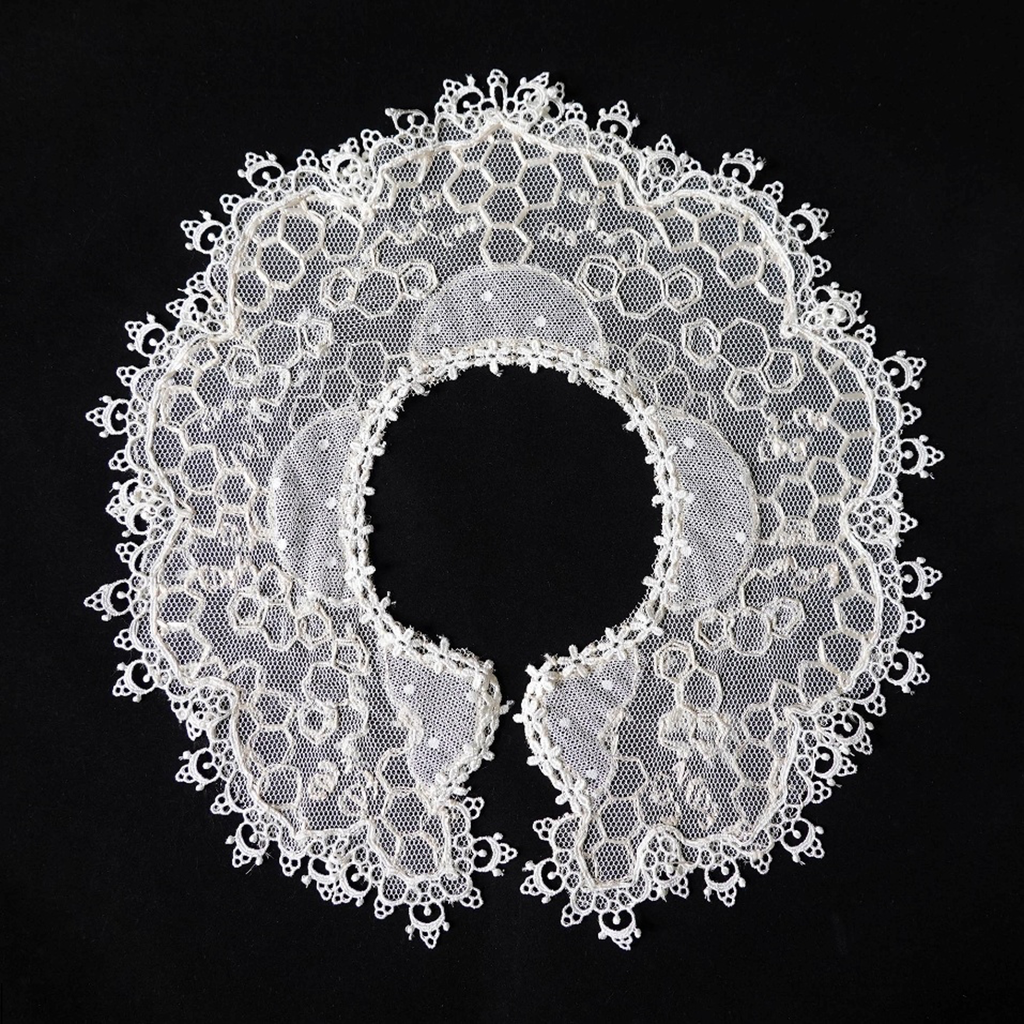
The Synthetic Weaves project, led by Professor Alana Harris (Department of History), reimagined traditional lace and embroidery through the lens of psychiatric and disability history. Working with artist Dr Eric Fong, dressmaker Valerie Moon, and members of The Grange Centre, the project translated the molecular structures of medicines used in psychiatric and disability treatment into new lace patterns, connecting historical needlework practices with contemporary art and pharmacology.
The project drew on The Grange’s own heritage as the School of Stitchery and Lace, which trained disabled women in embroidery from 1927. More than 40 Grange residents took part in creative workshops exploring this history, producing their own artwork in ceramics, photography and embroidery alongside two haute couture pieces created by Eric and Valerie.
By bringing archival material into dialogue with new creative practice, the project gave residents the opportunity to engage with their own community’s history — some for the first time — while raising questions about care, labour, autonomy and the value of disabled people’s creative work, both historically and today.
The resulting works will be exhibited at The Curiosity Cabinet in London from January 2027. The project has also opened new research directions for Harris, exploring the history of disabled labour, with further outputs including a conference presentation, a journal article, a podcast and a chapter in a forthcoming edited collection.
To read more about the project, please see the PDF case study below.